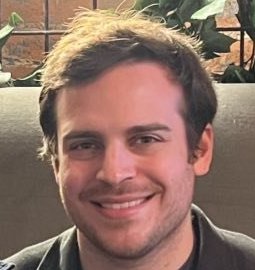
About Me
Hello! I’m Paul Coroneos, a Principal Platform Architect at Hilton and someone who has spent most of his life enthusiastically chasing the next hard challenge.
From electronics to engineering
That instinct goes back further than software. Growing up I was the kid who adopted the family computer as a personal project, slowly becoming the household IT support while spending too many hours on my dad’s IBM Aptiva S Series (you know, the one where you pressed the top and the drive bay popped up). That curiosity pointed me toward electrical engineering, and in 2007 I enrolled at Southern Methodist University to pursue a BS in EE and Applied Mathematics. Four years later I landed at Texas Instruments, first as a process engineer on the floor of one of the oldest wafer fabs in the world, then as a test engineer writing C++ tooling for semiconductor test systems, designing test PCBs, and doing the kind of unglamorous, high-stakes debugging that teaches you to think carefully before you act. At one point I was responsible for a tool called the HSM (High Speed Machine), a piece of equipment built in the 1960s implemented entirely in 74xx series logic gates. No microcontrollers, no firmware — just discrete logic all the way down.
Around 2012, still working full time, I started a Masters in EE at SMU with a focus on circuit design. I finished in December 2016. But somewhere in the middle of all that coursework I realized circuit design was not where my energy wanted to go. Software kept pulling at me.
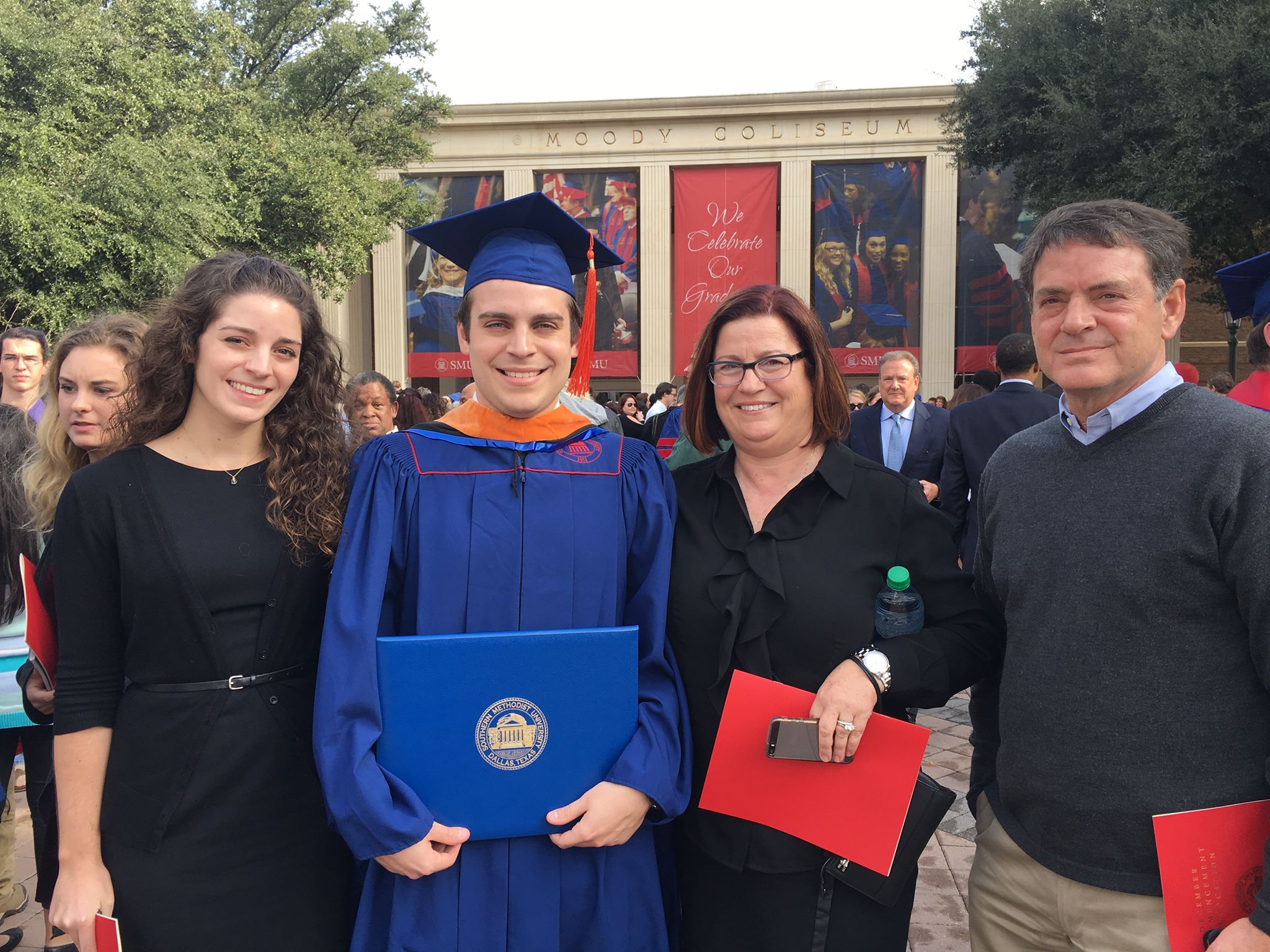
Graduation at Southern Methodist University with my family.
The pivot
In 2018 I enrolled in a part-time fullstack bootcamp while still working at TI. I was not sure I would leave semiconductors. I told myself it was just a challenge, a way to find out. That was a short-lived rationalization. I fell in love with software development almost immediately, and four months into the bootcamp I started applying for jobs. Hilton made me an offer and I have been here since, now going on nearly eight years.
Where I am now
The career arc from semiconductor test engineer to platform architect is an unusual one, and I think about it a lot. The through line is not the specific technologies but the orientation: I have always been most comfortable at the intersection of systems, tools, and the people building with them.
At Hilton I started as a front end developer on the hotel search experience, one of the highest-traffic surfaces on the site, where I spent several years working close to the product. From there I moved into the platform team, where the work shifted toward enabling other teams: driving framework and technology changes, building the scaffolding that lets engineers move fast, and aligning technical decisions to business initiatives. Most recently that work has evolved into agentic AI, where I was a core developer on the Hilton AI Planner, a generative AI-powered digital concierge now live on hilton.com that helps travelers explore Hilton’s global portfolio and plan stays through a conversational interface. The product went from an internal innovation challenge to a public beta launch in March 2026, and I continue to build in that space using AWS Bedrock, the Strands SDK, FastMCP, and the Anthropic SDK.
Agentic systems are genuinely hard to build well, and I find that difficulty interesting in the same way I found semiconductor debugging interesting: the failure modes are subtle, the feedback loops are long, and good judgment matters more than clever code.
I think of myself as a glue person. I care about the systems that make other systems possible: the observability, the tooling, the scaffolding that lets a team move fast without constantly breaking things.
Outside the terminal
The first is triathlon. I am an active triathlete and runner based in the Dallas area, racing across a variety of distances and events throughout the year. I have my eye on eventually taking on a large bike rally as well. It is a sport that rewards consistency over heroics, which suits how I think about most things. And as any endurance athlete knows, if it isn’t on Strava it didn’t happen.
The second is trombone. I am a two-time Texas All-State trombone alumnus, and at one point seriously considered pursuing music as a major instead of engineering. That passion found a home in college playing with the SMU Mustang Band, where I got my first real taste of performing at a high level alongside genuinely talented musicians. Music has always been a path to personal expression for me, which is probably why I could not stay away from it. After a 14-year break I picked the horn back up, and in March 2026 I performed at the Meyerson Symphony Center with a community band, which still feels a little surreal to say out loud. I am actively rebuilding upper register stamina and working through fundamentals I skipped when I was younger. Coming back to something after a long break teaches you a specific kind of patience that is hard to get any other way.
I mention both of these not as color but because I think they are genuinely relevant to how I work. Training for a triathlon and relearning a classical instrument both require you to be honest about where you actually are, build incrementally, and resist the urge to skip steps. That mindset translates.
What this blog is
This is where I share what I am learning, mostly around platform engineering, agentic AI systems, and occasionally the side projects that keep me sharp outside of work. I am also building a Modern Greek language learning app (my mother is a native speaker and conversational fluency with her is the stated v1 goal) and exploring other fullstack projects as they catch my interest. These are projects I build in close collaboration with AI tooling, though I think carefully about where I let it lead and where I do not. At the end of the day the experiences and code we build are still for humans, and I think that has to stay at the center of how we work even as the technology evolves around us.
If any of this resonates, I hope you find something useful here. Thanks for reading.